


 Mahnoor Khan
  June 12, 2026
  Mahnoor KhanJanuary 19, 2026
Launching a brand means competing with big giants. Whether it’s a startup or a small business, you need to make an impression with a visual identity to stand out. But a logo doesn’t have to be just a pretty icon.
It’s a story-driven logo design that can add meaning, emotion, and a narrative to your brand. Your logo represents who you are, what you stand for, and why customers should care.
It all comes down to creating a well-crafted logo that narrates the visual story of your brand. And no, it’s not about just adding a symbol, but creating an identity that makes an impression.
Let’s take a look at why logos created with a story driven approach always win over plain icons, how to design them, and what to watch out for if you’re working in a competitive environment, whether globally or in the UAE. Branding goes beyond just creating an aesthetic logo.
Table of Contents
Logos are more than just icons or decorations; they are your brand identity.
A well-designed logo can boost brand recognition by up to 80%. Also, it can contribute strongly to how consumers remember your brand.
65% of consumers say they can recognize a brand by its logo. You see, first impressions count. It is how consumers form initial judgments about a company’s credibility or the quality of a product.
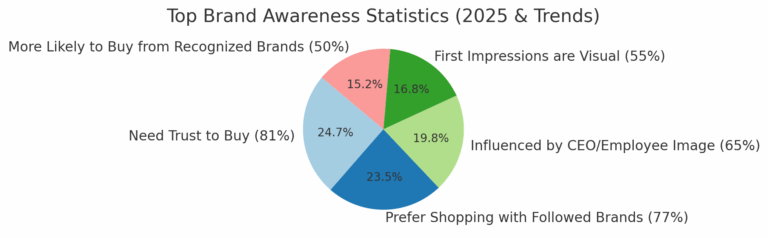
The above stats show how brand awareness and trend works in 2025. This clearly shows that a logo isn’t just a graphic; it’s a powerful psychological tool.
When you design a logo thoughtfully, it is easy to remember and distinguish. People see the logo as a reflection of the brand (trust, heritage, and values). These are the key factors that make your brand memorable.
Storytelling works.
There are many brand logos with compelling narratives creating an identity that is hard to resist. Such logos help build genuine connections with their customers.
By adding meaning to your branding with symbolic logo elements like icons, shapes, metaphors, you’re not only designing a unique recognition. A logo that reflects values, mission, history, or aspirations invites consumers to create an emotional connection. This emotional connection can be translated into loyalty, advocacy, and brand recall that lasts longer than any ad campaign.
Especially in markets like the UAE, where consumers have numerous options, a logo can help you stand out. Creating a memorable logo that is more than just a generic icon, and more meaningful than a purely decorative graphic. That is when you’ll think of a professional branding and design agency to create a symbol that reflects your brand value.
If you are looking for logo design in Dubai or similar global cosmopolitan markets, you need to pay attention to the context. The growing trend toward minimalist design that is culturally and visually appealing can help create meaningful logos. Your logo should be a combination of sleek, minimalistic, and subtle symbolic references that reflect the cultural identity or brand values.
In such environments, a visual narrative in branding is a logo that captures both global sophistication and local resonance. It helps brands navigate multicultural contexts, bridge cultural gaps, and build trust across broad demographics.
If you want to create a meaningful logo design, one grounded in storytelling, not just aesthetics.
Here are the core principles you should follow to create an effective logo design.
Before you begin designing your logo, you need to define: who you are, what you believe in, and what you want to communicate. This includes your mission, audience, values, origins, and the narrative you want your brand to carry.
When your brand’s core story is clear, symbolic choices become meaningful, not random.
Symbolism is powerful.
A shape, icon, or element can carry meaning. It can reflect strength, heritage, growth, sustainability, and elegance. Choosing and combining these symbols thoughtfully helps you create a meaningful logo design.
For instance:
The goal of a brand logo is that it should communicate values, not just visually, but also connect with the audience emotionally.
Complex visuals might appeal to the audience, but it rarely makes a lasting impression. A logo must work as well on a billboard as on a mobile screen or business card.
Simplicity is what boosts the recognition and scalability of a brand.
Minimalist logos, when done right, often carry the most power. It is easy to instill your brand identity with a few meaningful elements.
A logo rarely works alone. It takes a lot of elements to form a brand identity: colors, typography, tone, imagery, and more. Using consistent visual language across all platforms, like website, packaging, social media, and print, will help strengthen brand storytelling.
This consistency builds familiarity, trust, and a sense of authenticity for a brand. To create innovative brand touch points, it’s best to take assistance from a team of company profile designers to create a modern and aesthetic logo.
Even the best symbolic logo can fail if it lacks a brand message. That’s why testing is key. You need to gather feedback, observe reactions, test readability, and recall across contexts (digital, print, small sizes, large sizes). Many branding experts recommend refining logos based on real-world feedback before final launch.
Logo designing is a complete process. You can not just rely on templates to create a brand identity. For a story driven and meaningful logo design, you can start with:
Not all story-driven logos look the same. Depending on your brand type, goals, and audience, different approaches may work better.
Adding minimal shapes or icons, with negative space, can help create symbolic meaning to the design. It is ideal for brands seeking subtlety, sophistication, or a modern, timeless feel. Great for startups, tech firms, lifestyle brands, or businesses operating in big markets.
These logos are more intricate. You can even see some custom illustrations, characters, scenes, or heritage references. This is best for brands with culturally rich stories, fertile narratives, or wanting to highlight heritage, craftsmanship, or artisanal values.
Using geometric or abstract forms can communicate your brand identity and values. You can also use abstract concepts like growth, unity, innovation, or luxury. It is good only when you want to include universal appeal or cross-cultural resonance.
Combining icons, wordmarks, and narrative cues can help create a story driven logo. This is common when a brand wants to create clarity.
Choosing the right type of logo depends on brand identity, audience, and cultural context. Especially if you’re looking for a stationery design expert in Dubai or cross-cultural markets. As a brand, this should be your long term goal.
If you treat your logo as just an aesthetic symbol or a random shape, then it won’t make an impact.
In short, you may lose an opportunity to build not just a brand, but a story that connects with consumers.
In a world saturated with brands, visuals create noise. But with a meaningful logo, you can do much more than that.
A meaningful logo is a strategic necessity. When you invest time and thought into a story-driven logo design, you’re not just designing a mark: you’re giving your brand a voice, a character, a soul. You’re telling people: “This is who we are”.
Create a meaningful logo design today and rebrand for a lasting impression.
Mahnoor Khan
June 12, 2026  Mahnoor Khan
February 2, 2026
Mahnoor Khan
February 2, 2026 Table of Contents
