Hybrid Brochures: Print + Digital Guide l Dubai Monsters
Hybrid Brochures
Mahnoor Khan
DateNovember 26, 2025

Hybrid Brochures: How to Integrate Print and Digital for Maximum Reach

Interactive digital-friendly brochures are the new trend on the block. 

You can now see brands opting for marketing approaches that are more interactive and dynamic than static ones. From  video-rich versions, to flip through product galleries, it is now easy to interact and convert with your audience.

But what if you wish to keep the print part too? With the emergence of hybrid brochures, you can now provide physical and digital elements to your audience. This cross-channel marketing, can empower your brand to engage with audience in multiple ways, maximizing 

Especially if your business is based in Dubai it is important to adapt a more innovative approach and integrate digital + print brochure design strategy to take a competitive edge.

Let’s dig deep to understand what separates hybrid brochures from traditional ones.

What are Hybrid Brochures?

A hybrid brochure is a blend of print and digital design. It allows you to experience traditional printed brochures powered by digital solutions.

These versions of brochures are digital, interactive ones. The traditional brochure is presented as a dedicated website or microsite that is responsive across different devices (mobile, tablet, desktop, or touchscreen) is important to gain instant conversion.
Why Hybrid Brochures Matter Today?

Source

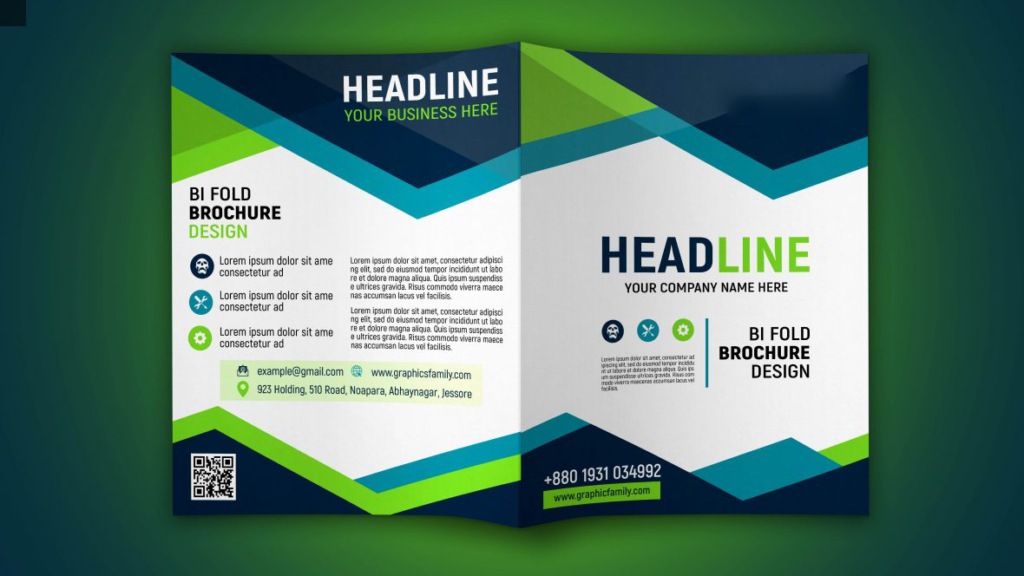
This is what a hybrid brochure looks like. It has QR code, contact details that help connect consumers and interact with business easily. Hybrid brochures are the new trend. Here’s why it matters the most in today’s digital landscape.

1. Changing Consumer Behavior

Consumer behaviour is never the same.

You’ll always find digital metrics different from physical marketing. The average response rate for direct mail is 4.4%, compared to 0.6% for email.

Now you must be wondering, why does print still work? Because it’s tangible. You can feel it and create a sense of connection. Also, print material often leads to higher engagement and recall as compared to digital ones.

2. Trust, Credibility & Memory

Print media is also perceived as more trustworthy than digital ads. For instance, 56% of consumers say they trust print advertisements more than digital ones. 

Moreover, print requires less cognitive effort to process. The information is easy to absorb and remember. In fact, physical brochures are much easier to recall.

3. The Power of Integration

The magic really happens when print and digital are blended together. According to print marketing research, using print in integrated campaigns can increase overall campaign effectiveness by up to 28%.

In a nutshell: hybrid brochures give brands an opportunity to build trust with tangibility. Moreover, it can leverage the interactivity and measurability of digital, making it a powerful cross-channel marketing tool.

Core Features of an Effective Hybrid Brochure

So what makes a hybrid brochure truly effective? Let’s explore some of the core features to see how you can create one for your brand.

Scannable Layouts & Strategic QR Code Placement

  • The strategic placement of QR codes or NFC can trigger instant reaction. It can allow users to continue with the purchase or interact with your brand.
  • Ensure they are visually integrated but highly visible so users naturally spot them.
  • Use short, clear calls to action for easy and quick conversion. Test out CTAs like (“Scan to explore more,” or “View our gallery,” ).

Mobile-Friendly / Digital Version

  • When someone scans the QR code, they should land on a mobile optimized, responsive site, not a desktop page that takes ages to load.
  • With a digital version it is easy to integrate: videos, image sliders, animations, or even AR (augmented reality). These features are hard (or impossible) to achieve in print.
  • Your brand brochures should have forms, chat widgets, or links to social media to boost real time engagement.

Clean Typography & Print-Optimized Design

  • Your brand typography should be the same for print and must align with your digital brand identity.
  • Start with a strong hierarchy: add headings, subheadings, body text, callouts to make your brochures stand out.
  • Leave enough white space to avoid cluttered layouts so your QR or CTA won’t get cut out.

Interactive Digital Content

  • Use embedded videos (product demos, brand stories), 3D product visuals, or even AR to make the online brochure more engaging.
  • Offer downloadable assets: catalogs, spec sheets, or brochures in PDF.
  • Add links to derive actions like sign-up forms, “book a meeting,” “share on social,” to improve conversion rate.

Personalization through Variable Data

  • For print, use variable data printing to personalize brochures by name, region, or customer segment.
  • For digital, customize content based on user behavior, geography, or preferences (once they scan / visit).\
  • This personalization builds stronger relationships and increases conversion.

How Print and Digital Work Together?

To understand the relation between print and digital you need medium support to create a hybrid brochure system. Here’s how.

Print as Attention-Grabbing and Trust-Building

  • The printed brochure is the first touchpoint: it draws in attention, builds credibility, and provides a physical feel to make your brand appear more premium.
  • For events, retail stores, or high-end offices like Dubai, you need a well-designed brochure conveying quality and seriousness that reflect your brand. Partner with a professional brochure design in Dubai to create an engaging and attention design.

Digital Version for Deeper Engagement

  • Once someone scans the QR or visits the link, the digital version allows deeper storytelling. It should give them an overview of product videos, testimonials, and behind-the-scenes.
  • The digital experience can be tailored, trackable, and interactive, far beyond what print alone can provide.
  • Analytics: You gain insights on scan rates. It tracks time spent, interactions, and which parts of the brochure perform best, data you can’t get from print.

Consistent Branding Across Channels

  • The visual identity (colors, fonts, imagery) should stay consistent between the print and digital versions to maintain brand coherence.
  • Messaging should be aligned: you need to keep value propositions in both print and digital versions.
  • Calls to action in print brochures (e.g., “Scan to explore”) lead to digital CTAs (“Buy now,” “Download,” “Contact us”).

Closing the Loop

  • The printed brochure prompts digital interaction; the digital version encourages further action or sharing.
  • After digital engagement, you can retarget your consumer: nurture their email, run social media ads, or follow-up campaigns based on how users interacted.
  • Because the digital version is dynamic, you can update it without the need for reprinting, and save printing cost, keeping the content up to date.

Design Tips for a Strong Hybrid Brochure

Here are practical design tips to make sure your hybrid brochure is compelling, effective, and user-friendly.

1. Clarity of Message

Make sure your brand message is presented in a clear manner. Also, it is important to keep print copy concise and focus on core brand messages. Nevertheless, for the digital version you need to expand, explain, and deepen the story.

2. Visual Consistency

For a brand it is important to maintain visual consistency. You need to adapt a unified color scheme, photography style, and graphics. If you’re looking for a professional brochure design in Dubai, you need to consider some pointers. The local aesthetics, high-quality finishes, or luxe textures can easily enhance the feel of your brochure for Dubai based audiences.

3. Readable Typography

For print, you need to pick font sizes and weights that remain legible without overwhelming layout. However, for online you need to ensure the typographic scale works on smaller screens; use web-safe or variable fonts to maintain consistency.

4. Strong Call to Action (CTA)

For a print brochure it’s important to add “Scan this QR” or “Visit our digital showroom.” CTA to make it more interactive. You can layer CTAs like “Learn more,” “Buy now,” “Share,” “Contact us.”

5. User Navigation (Digital)

Use anchors, menus, or “back to top” buttons so users can navigate easily. Make sure images, videos, and interactive elements load smoothly and are mobile-optimized.

5. Testing & Iteration

  • Prototype and test QR codes: ensure they work reliably under different lighting conditions and from different angles.
  • Gather user feedback: run a small campaign to measure scan rate, dwell time, and conversions. This will help you analyze what’s working for your brand and what’s not.

Business Benefits of Hybrid Brochures

Implementing hybrid brochures isn’t just about aesthetics, they deliver real business value.

Maximized Reach via Cross-Channel Marketing

By combining print and digital marketing, hybrid brochures help you reach both offline and online audiences, bridging tactile engagement with screen-based interaction. This integrated approach amplifies your message far beyond what either medium could do alone.

Deeper Engagement & Analytics

  • When someone scans the QR code, you can track their behavior: how long they spend on your digital brochure, which sections they explore, which CTA they click.
  • These insights help you refine your content, improve engagement, and retarget more effectively.

Stronger Brand Trust & Consistency

  • A tangible, well-designed printed brochure communicates quality, and when paired with a polished, interactive digital experience, it reinforces brand credibility.
  • Consistency across print and digital strengthens brand identity and memorability.

Improved ROI & Cost Efficiency

  • According to recent data, 50% of marketers report that integrating print and digital increases overall campaign ROI.
  • Print marketing still delivers very strong response rates: the average direct-mail response rate is around 4.4%, versus 0.6% for email.
  • Plus, since the digital portion is dynamic, you don’t need to reprint every time you want to change or update content, saving costs in the long run.

Longevity & Physical Presence

  • Printed brochures typically stay around: studies show print materials are often kept for days or weeks, giving repeated exposure.
  • That physical presence translates into brand reinforcement long after the initial distribution.

Personalization & Relationship Building

  • Variable data printing allows you to personalize each printed piece (e.g., name, region, special offer).
  • When the user transitions to digital, you can further tailor their experience (e.g., showing them relevant content based on their scan).
  • This combined personalization builds a stronger, more personal relationship with your audience.

Sum Up

The world we live in today is digital oriented. There is no way your busines can prosper on traditional print media only.

Integrating hybrid brochures can help refresh your marketing campaign. You can combine the tangible trust and memorability. By combining both print and digital you can boost interactivity, personalization, and measurability of your brand.

 This cross-channel marketing strategy is more than just smart: it’s essential.

Next Step? Start small. Design a hybrid brochure campaign, measure your scan rates & engagement, iterate based on data, and then scale.

 Work with a team of expert to create brochure design in Dubai. This way you can create something that feels premium, relevant, and fully integrated.

By blending print and digital marketing, your brochures become not cross culture but it also build trust, engage deeply, and drive real business results.

whatsapp-btn